
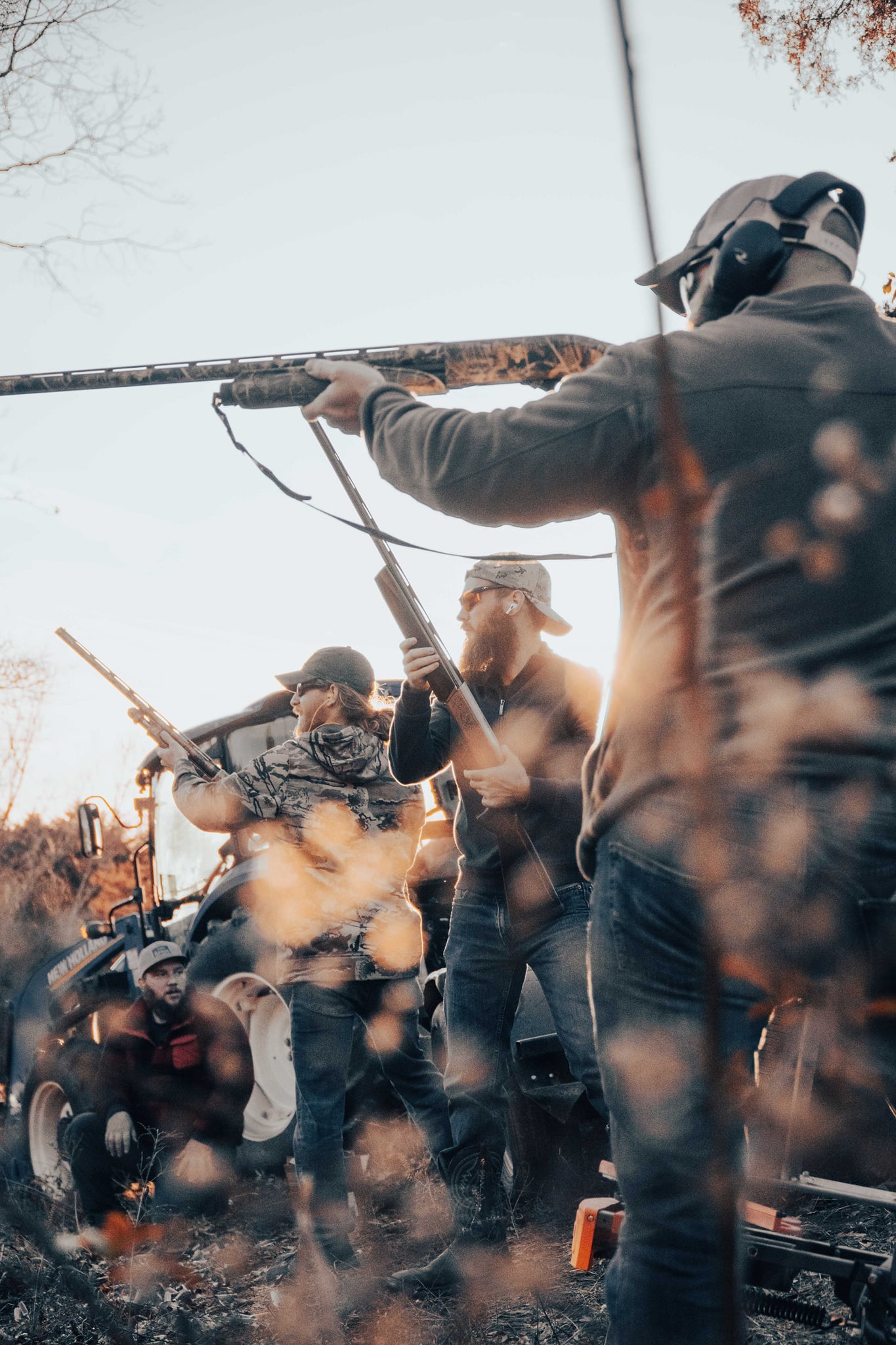
1. Don’t walk through an area you are about to hunt.
This is, by far, one of the most important things I have learned throughout my years of hunting. I remember being in high school and trying to figure out what this hunting thing was all about and walking through a piece of public land trying to find a good hunting spot. I would often find a good-looking spot. However, by the time I got to where I wanted to set up for the hunt, I had just stomped through the area I was hoping to see the deer use. This is a double-edged sword because a) I had already walked through where the deer would come from and likely blown them out and b) the only place I hadn’t walked was where my scent was often going. Looking back, it would have been more productive to drive around and scout from the road instead of wasting my time on a hunt I hadn’t thought all the way through.

2. Don’t spook deer getting in and out of your stand.
This is one of the things where outdoor media has ruined many people’s properties in the real world. *That* hunting celebrities’ 1,500-acre manicured deer parcel in Kansas or Iowa will likely hunt differently than your 100 (or 200, or 40, or 20) acre parcel. You see these shows on TV where the only ‘hunting’ happening is in a big box blind with a heater running overlooking a 20-acre cut ag field with 30 deer piled into it. Don’t get me wrong, I love box blinds, ag fields, and high deer numbers. But that picture is simply a fantasy for most people. We often think if we simply replicate what we see on TV, we will receive what we see on TV. The reality is that most hunters have a fraction of the land, resources, and time of the professional hunters. You have likely invested too much money, time, and resources into your land to run off deer getting into and out of your stand. Don’t attract all the deer to your food plots just to spook them out of the area when you leave.
3. Know your wind.
This one is pretty self-explanatory. Simply make sure the wind is not blowing your scent into an area where you expect to see or hunt deer. Ideally, your wind is blowing your scent back from where you are accessing from. A rule of thumb here is to just access your hunting location with the wind in your face.
4. Know your thermals.
Thermals are air currents created by the cooling and warming of air. Think about a hot air balloon. These work by pumping hot air into a balloon; causing it to rise. Generally speaking the air will warm up and rise uphill in the morning, and cool down and fall downhill in the evenings. Thermals will carry your scent with them. I got busted earlier this year by trying to hunt an area on the side of a hill in the morning. When a few does came through downhill of me they winded me even though the wind was in my face because the thermals were still falling downhill because the sun hadn’t risen to warm the air up yet.

5. Have A Plan.
Know why deer will use the area you are hunting. The most unsuccessful hunts I go on are ones where I don’t have a game plan for the hunt. Ask yourself a few questions before setting up in a given location. ‘Why would a deer use this spot?’ ‘Is this a place deer want to spend time in?’ ‘Does this location clearly relate to a food source or bedding area?’ If there is no clear reason a deer would spend time here, find a new spot.
6. Be an Ethical Hunter.
I simply will not hunt with people who do not obey game laws or respect the animals they are pursuing. There is nothing more disrespectful to an animal than killing it and leaving it to rot (barring any extreme circumstances). If I take the life of an animal, I have a duty to honor that animal.
7. Consider Your Family.
Hunting and outdoor recreation is an amazing way to spend time with your family while doing what you love as an outdoorsman. Spend time on your land with your family; hike, scout, spend time with your kids, hold your spouse’s hand. One thing I am in the process of learning is how to have a healthy balance of time throughout the hunting season, especially the rut. Your family is more important than deer hunting. Love them. Care for them. Spend time with them even if that means choosing them over a great afternoon in the stand.
8. Respect the Land.
Being an avid hunter of public lands, this is a big one. Just this year I hunted a spot in Daniel Boone National Forest where somebody had literally backed up a truckload of junk and dropped it in the access trail. Things like that stir a cocktail of aggravation and sadness in me. Another part of respecting the land is respecting other people’s land. Just this year we had a trespasser drive through the middle of a food plot to access the interior of the property. There is no longer any excuse for this kind of behavior. When we take the field, we have a responsibility to know hunting regulations and property lines.
9. Don’t Be a Know-It-All.
Learning is one of the most enjoyable parts of being an outdoorsman. Nobody has reached the destination of knowing everything. There is always something to be learned and the mark of a true outdoorsman is the constant pursuit of new things to learn. One of my goals for GLC is to establish a culture of humility and learning.
10. Have Fun.
If hunting is a passion, it should be fun. You should be able to spend quality time with friends and family without trying to prove that you’re the best hunter in the state. To be honest, there have been times in my life where hunting was no longer fun, but rather it was a way to prove how manly or self-reliant I can be. I encourage you to figure out how to make hunting fun. That might be picking up a shotgun and dove hunting with your friends or family. That might be taking your kids or spouse. That might be finding a good hunting club to be a part of. For me, the fun part of hunting is strategizing habitat management for deer. Whatever it takes to make hunting fun, do it.
 Genetics Land Consulting