
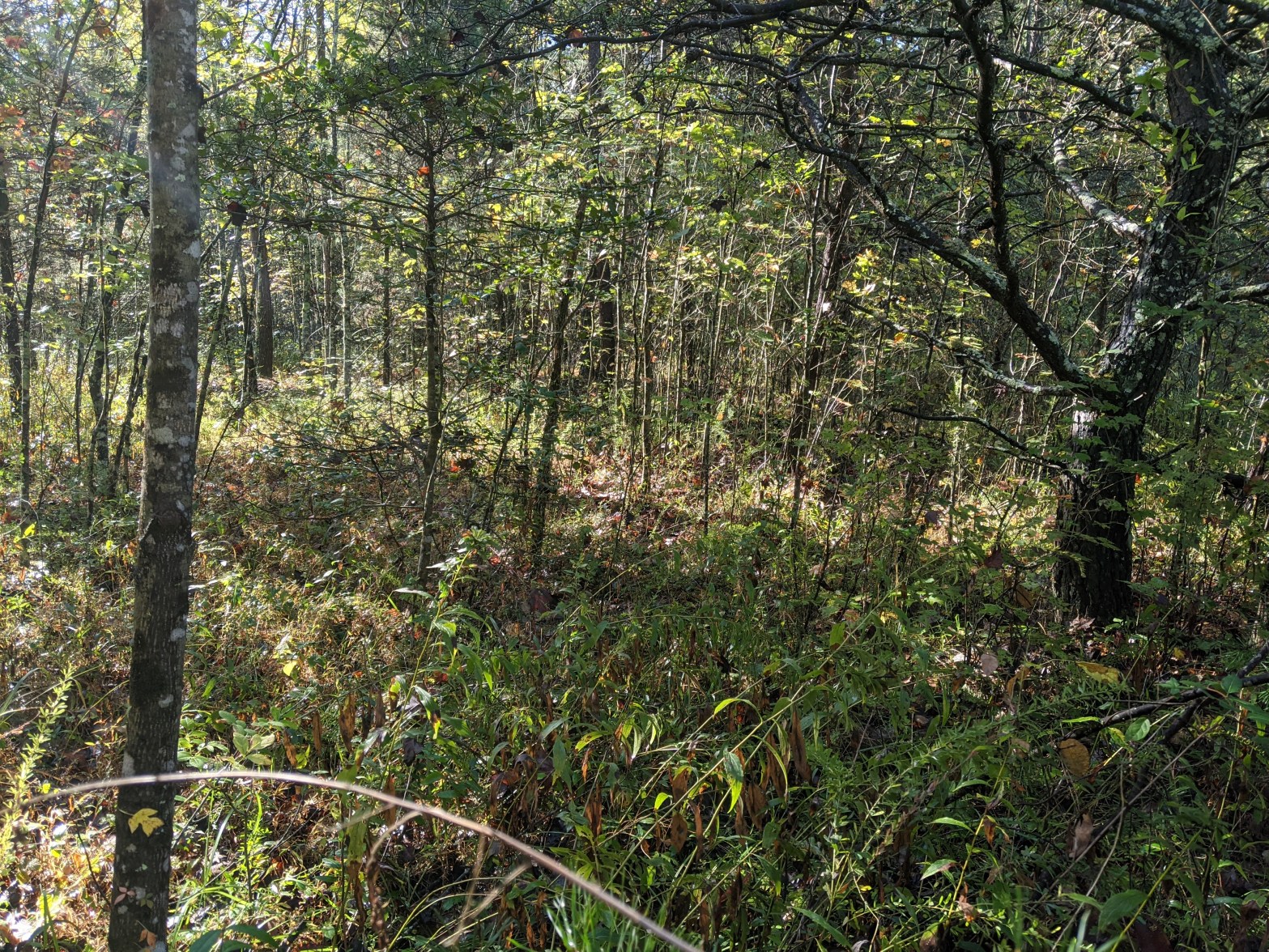
There are two major components to cover that need to be considered: side cover and quality browse.
Side Cover
First, side cover is a must in developing quality bedding areas. Deer are very social animals and relate to each other in different ways at different parts of the year. Generally speaking, deer enjoy using the same land as other deer, but they don’t really like sharing their bedroom. As a land manager, developing side cover to create bedding areas can greatly increase the amount of deer that will use that bedding area. This is especially true when it comes to mature bucks. Older bucks are kind of like your grandfather – they value their distance away from everybody else. Think about this like you would think about your own home. Your kitchen, bedroom, bathroom, closets, and living room are probably not all in the same room. Furthermore, you aren’t likely to share that home with another family. Now think about a duplex. Duplexes can take the same amount of square footage and throw in some walls and privacy and they are suitable for numerous families to live in. Deer relate in the same way. Consider the follow example:

This block of timber is surrounded by hundreds of acres of ag land and had a few deer bedding in it. The problem was that you could stand on one edge of the timber and see all the way through to the other side, even during the summer months. There was no side cover; no walls for privacy and security.
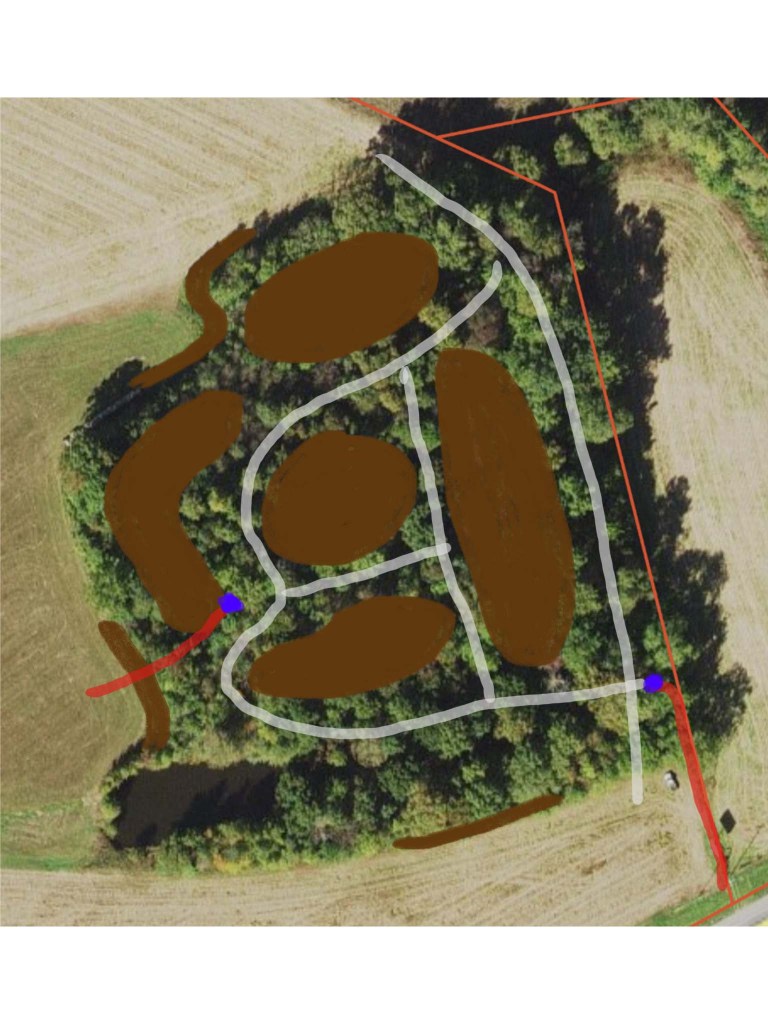
To fix this issue, I recommended using some well-placed chainsaw work to create a little more side cover. The areas in brown are portions of this timber where I recommended going in and using a combination of selective-cutting and hinge-cutting. By doing this, you can do three things: create side cover that was not previously there, establish travel corridors within the timber that the deer would use and we could hunt, and put plenty of food down at ground level. That leads us to the second thing to consider when talking about quality cover.
Quality Food
Going back to our strategy on food, you’ll recall that deer will eat ~6-8% of their body weight every single day. With that math, it will take 5,110 pounds of food to support a single 200-pound buck throughout the year. When thinking about food, you will also remember that deer typically feed 4-5 times every 24 hours. As important as a quality food plot strategy is, food plots are not the end-all-be-all when it comes to food. In fact, most deer will only visit your food plots 1-2 times per day. So what about the other 3-4 feedings throughout the day?
This is where quality browse in cover plays a massive role in the development of your deer herd. If you have 50 acres of timber but only 25 pounds per acre of quality browse on that land throughout the year, you only have 1,250 pounds of food on that entire piece of land. Assuming you have a good food plot system, that’s still only enough food to feed a single 100-pound doe for the year.
Having quality browse in cover is vital, and that means having plenty of browse at ground level usually takes priority over closed canopy forests. Especially if that browse includes a combination of grasses, briars, conifers, and early successional growth. This is one of the many lessons I have learned the hard way. Growing up I always believed (and heard) that if you could find big, mature timber it would be a great place to hunt. So I went and hung a stand and a camera in a very mature stand of timber thinking I had just found the honey hole. I was perplexed when I returned a month later to find very few deer were using this area regularly. The reason for this is that there was virtually zero food at ground level. The only deer I ever see using ‘big woods’ are using it to go somewhere they actually want to spend their time, i.e. food plots or bedding areas. I had been fooled into thinking that what looked attractive to me was going to be attractive to the deer. Even on the best days of hunting, that stand of timber was nothing more than a travel corridor for deer to get to where they really wanted to go – the nasty draw 150 yards away from my stand. Frankly, I like using ‘big woods’ to access good hunting locations because I know there is a low probability of deer being in these areas.

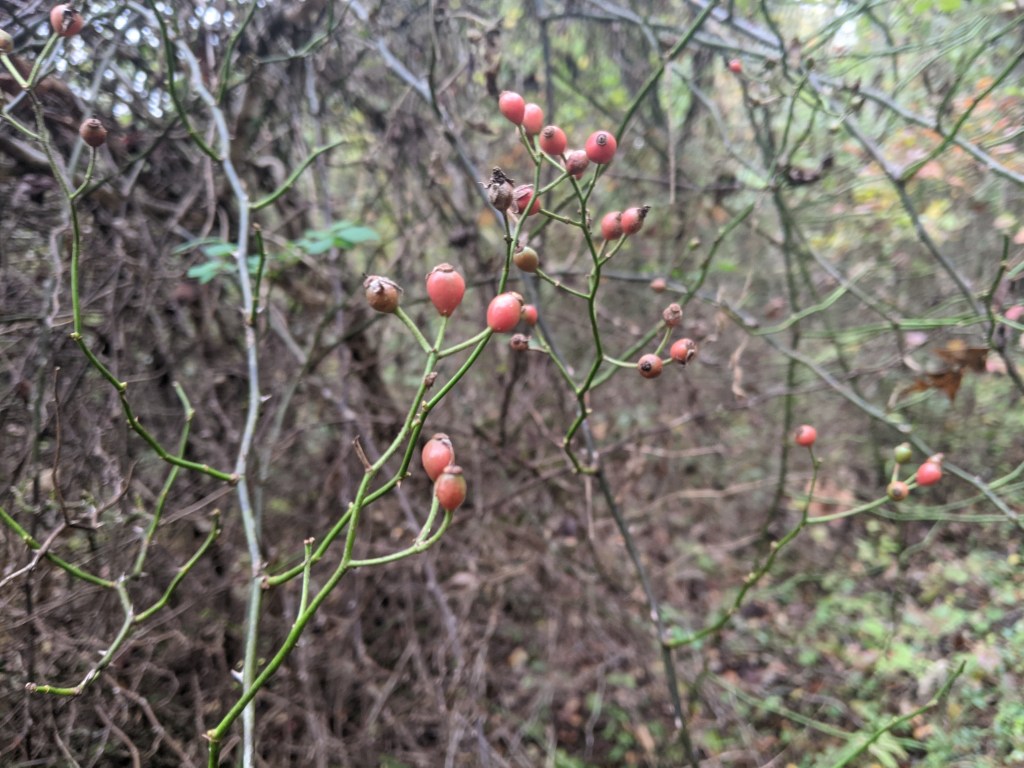
Think about the areas of the country that grow the largest deer – typically the mid-west or high production ag regions. Think about the state with the largest deer population in the nation – Texas. What is a common characteristic of these areas? There is an immense amount of sunlight making it to ground level allowing for the growth of all kinds of quality browse to feed a deer herd. This is exactly the opposite of what is provided by big mature stands of timber. The enormous canopy blocks 95% of the sunlight from reaching the forrest floor, significantly limiting the amount of actual food and cover that same acreage could produce with the correct forest management.
Conclusion
Quality cover is a necessary component to a healthy deer herd. The combination of side cover and quality browse in bedding areas can greatly increase your property’s carrying capacity. This might sound like an intimidating step to take for your property, but I would argue that creating this cover is easier than planting food plots. The hardest part is knowing what to change and why you’re changing it.
At GLC, we don’t want your parcel to be a piece of land that deer just pass through to get where they really want to go. We want your parcel to be the destination that the deer are trying to get to. We want to assist you in creating and designing quality cover that will hold the attention of mature bucks in daylight throughout the hunting season.
 Genetics Land Consulting