
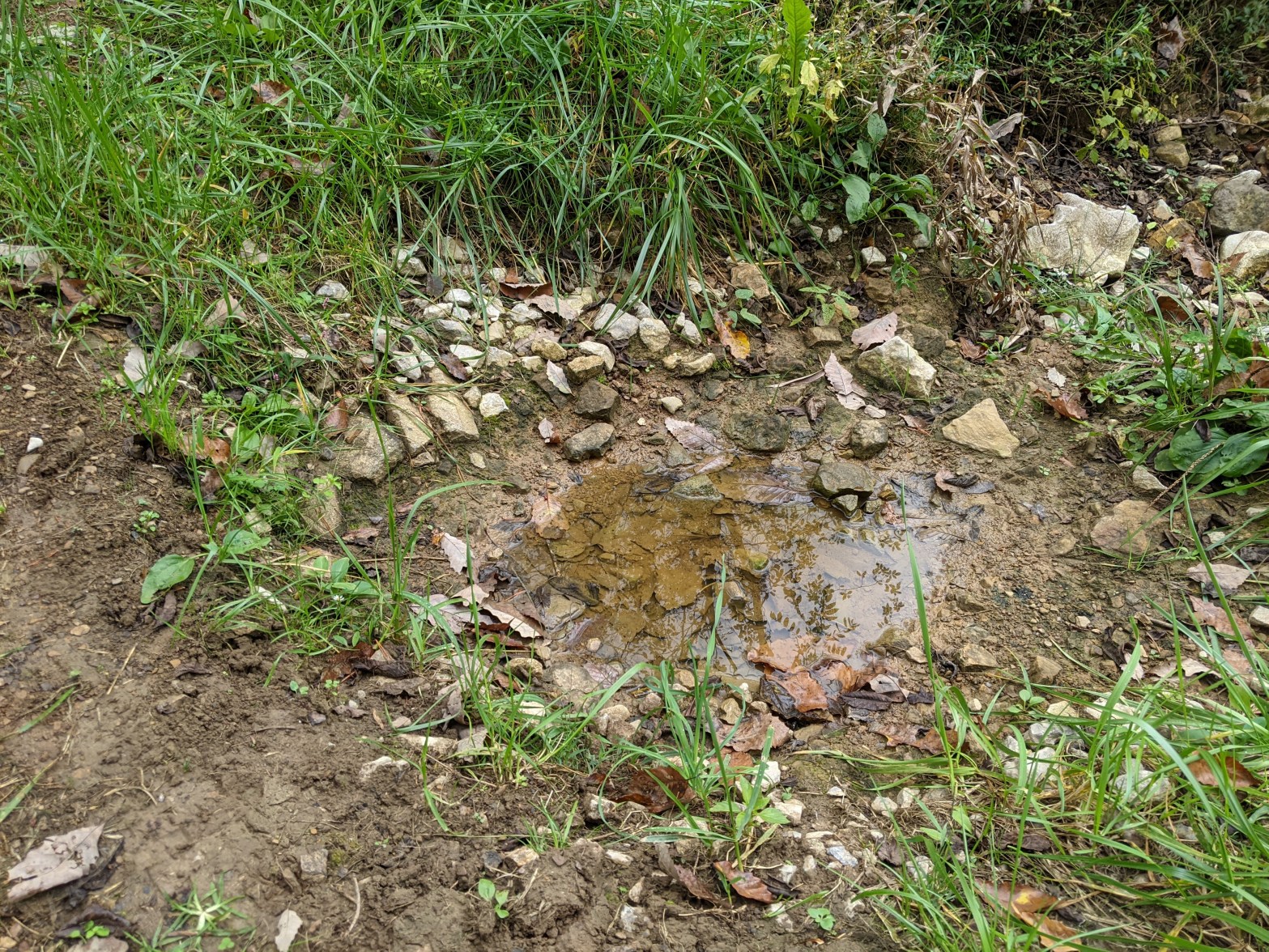
There is no life without water. Quality water sources are often overlooked for a variety of reasons. Maybe we just always assume deer know where the water is, and we don’t want to worry about it. Maybe we hope that the huge pond or the creek is an adequate water source for our deer herd. In all fairness, big ponds or rivers can often create efficient pinch points to hunt as well as providing a pretty stealthy access route. But what if you could incorporate the attraction of a quality water source into your hunting and management strategy? I want to share with you a few observations I have made about quality watering holes.
Big Water Creates Pinch Points
If you are trying to get from point A to point B and there is a large body of water between those two points, you are most likely going to simply walk around the water source. Deer are typically the same way. For much of the year, they cannot afford to burn that much energy swimming and getting wet if they don’t have to. Consider the example below:
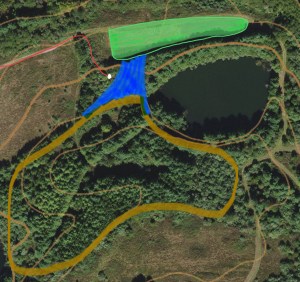
If the 7-acre wooded cover to the south is where many deer are bedded and the green food source is their destination for the evening feeding, the large pond forces all of the deer from the bedding area into a “funnel” or “pinch-point”, indicated by the blue. The red line notes the hunter access trail into the stand, which is indicated by the white dot. If you were to hunt this stand with a South or East wind, you could access and hunt without the deer ever knowing. On top of that, all of the movement into the evening food source would be funneled to stay within 35 yards of your tree stand.
Small Water Defines Movement
This is especially true if your parcel does not have an existing water source. One quick note here: conventional wisdom suggests that a big pond would be a great water source for wildlife. However, deer tend to prefer a small, secluded water source over a several acre pond. In fact, I have seen many deer walk around the big water source to get a drink out of a little puddle in the tire rut along the logging road. Bigger is not always better, especially for those old and weary bucks that rarely step out into the open.
So if you have a parcel that doesn’t have any small, secluded water sources a watering hole may be the ticket to defining the deer movement in your area. A major reason for this is that from dawn until dusk, many deer are remaining in the woods and eating low moisture things like briars, acorns, and shrub tips. A well-placed and hunt-able water source back in the woods might be what you need to get a shot at that nocturnal buck that always seems to show up 20 minutes too late to your food plot.
Stagnant Water Is King
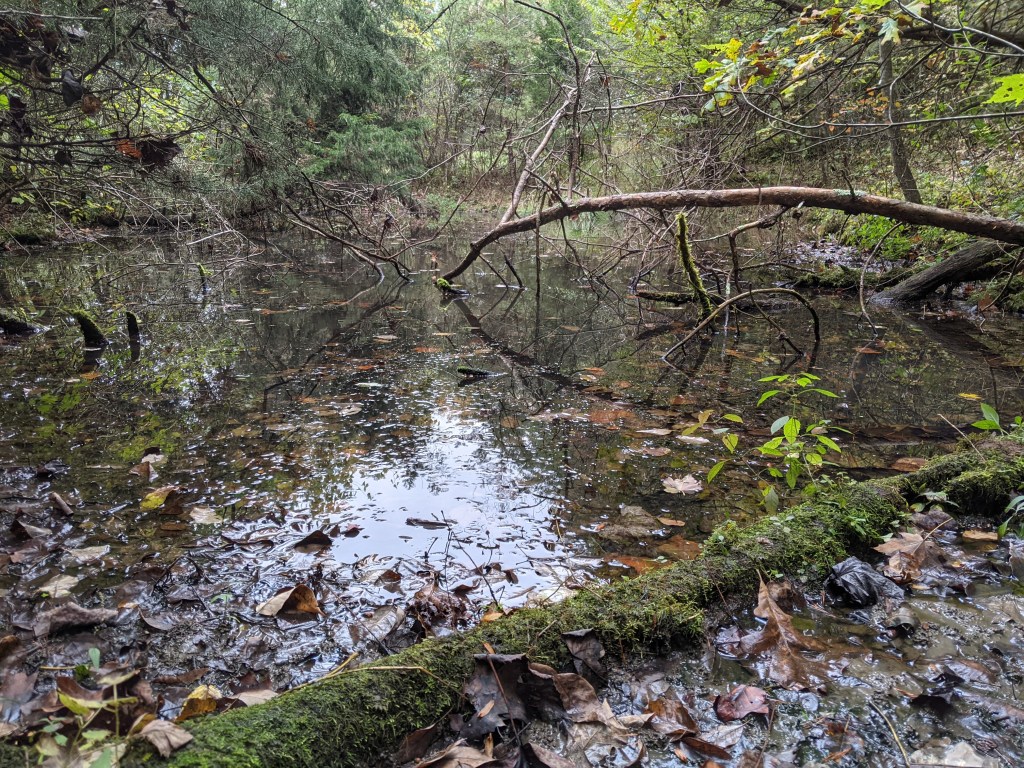
During times of adequate rainfall, patterning a mature buck on water is extremely hard. However, in times of drought, a stagnant little water source can be golden. Stagnant water is typically better than moving water because moving water can be very loud. Deer do not like to put themselves in situations where their senses cannot work to full capacity. It is a deer’s #1 goal throughout the day to survive, especially those old bucks. If deer have to choose between a loud creek that will dull their sense of hearing or a quiet puddle where they can remain alert to predators around them, most will choose the latter.
Water Can Attract New Deer
When you think of water, you probably do not think of it as a legitimate attraction to your land. But this isn’t always true. If the land around you is lacking in secluded water sources that deer like to use, giving them that option on your land will likely be very beneficial for your herd. Even if the properties surrounding your parcel offer large ponds and creeks, offering small, stagnant water sources in thick cover may be enough to draw deer onto your land.
Another major way these watering holes attract deer to your land is during the rut. Bucks travel great distances during the rut. Caesar Kleberg Research Institute spends a lot of time and resources researching Whitetail deer. They did a study of 33 different bucks throughout the hunting season to observe daily movement. Outside of the rut, those bucks traveled 2-3 miles per day. During the peak rut those same deer were traveling over 6 miles every single day. According to the NDA, bucks typically lose an average of 20-25% of their total body weight during the rut. With bucks exerting that much energy to finding a receptive doe, water sources become that much more attractive. Having a well-placed and huntable water source in a “cruising” location on your property can attract and hold deer from miles around.
Moving Water Creates Access Routes
As discussed in the article about access and deer security found here, the ability to access stands, especially in the interior of your property can be a valuable tool to effectively hunt your parcel. This is where creeks, streams, and rivers come into play as it relates to how you access your hunting location. A loud creek or river is the ideal cover for accessing that interior hunting location without blowing an area out.
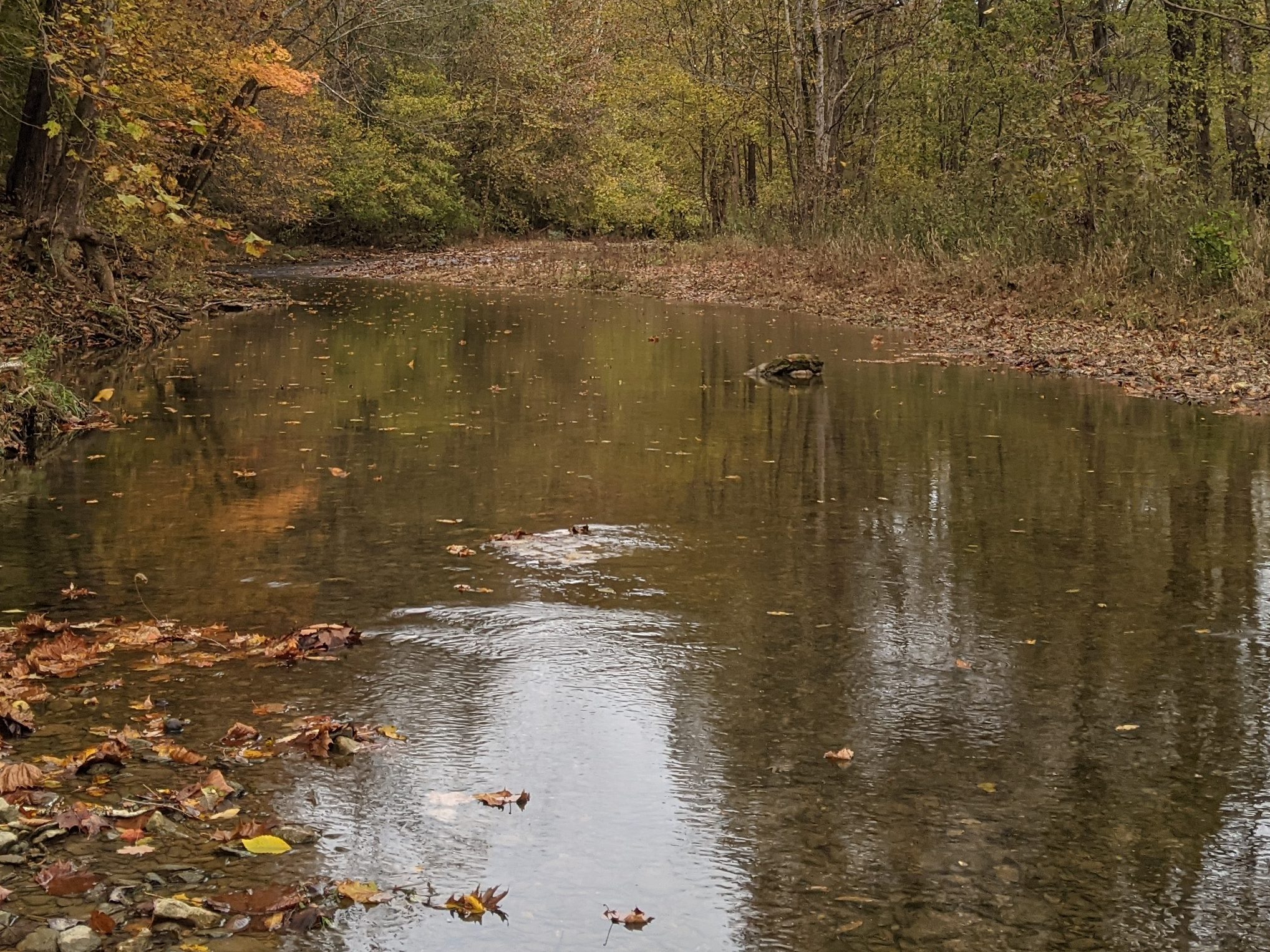
This is the exact tactic I used for one of my most exciting hunts of the 2021 season. I followed the river pictured above for about half a mile down the river to access a bedding area on public land that held a lot of deer. I was able to follow the river all the way to the downwind side of the 7 acre bedding area and set up 40 yards into the timber. That morning gave me several really exciting encounters with bucks cruising the downwind side of that bedding area searching for a receptive doe. The right buck did not walk by that morning, but it confirmed one truth about effective deer hunting: Moving water provides incredible sound cover to access those hard-to-access hunting locations.
Conclusion
Not all water sources are created equal. Large ponds play a different role than creeks. Creeks play a different role than secluded watering holes. Whatever the case may be, water is an essential ingredient to your Whitetail success. As a client of Genetics Land Consulting, you will receive recommendations for the following:
- How to access stand locations as they relate to water
- Creating pinch-points between bedding and food
- Whether you need to eliminate natural watering sources and which ones to eliminate
- Where to place huntable water sources
 Genetics Land Consulting